


Road Plates - Everything You Need to Know Before Choosing
A complete guide to the types, applications, and costs of road plates.
Road plates have been a fundamental solution in construction and logistics for years. They allow for quick ground reinforcement, ensuring the passage of heavy equipment and avoiding costly downtimes. In this guide, you’ll find the most important information to help you choose the right type of plates and match them to the needs of your project.
Introduction – What Are Road Plates?
Road plates are prefabricated surface elements used for quick and effective ground reinforcement. Their purpose is to create a stable surface on which heavy equipment, trucks, or pedestrian traffic can move. They help avoid problems with mud, ruts, or machinery sinking. This solution has been used for years in construction, industry, logistics, or during outdoor events.
Compared to other methods like concrete pours or paving stones, road plates stand out for their quick installation, reusability, and great flexibility. Once laid, they can be dismantled and moved to another location, making them a long-term investment.

What are the types of road plates?
There are many variants available on the market. Each type differs in material, durability, and range of applications. The choice of a specific solution depends on the nature of the investment, the type of soil, and the anticipated loads.
Click on the name of the specific road plate to learn more.
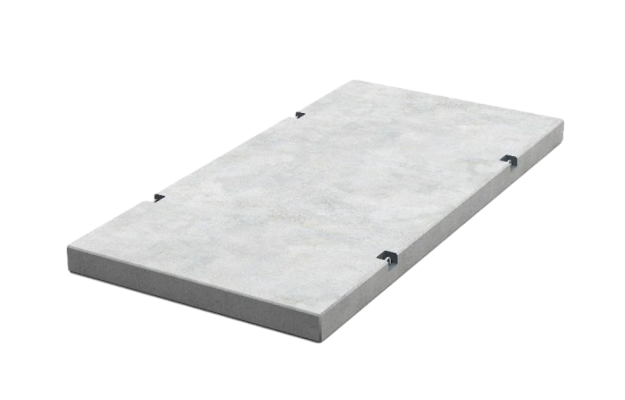
1. Concrete plates
These are solid, concrete plates reinforced with steel reinforcement, intended for intensive use – maneuvering areas, access roads, or parking lots. They have mounting handles, which facilitate precise placement without gaps and seams, increasing the comfort of use and the durability of the surface. The concrete used in production is selected to withstand varying weather conditions, including frost and precipitation.
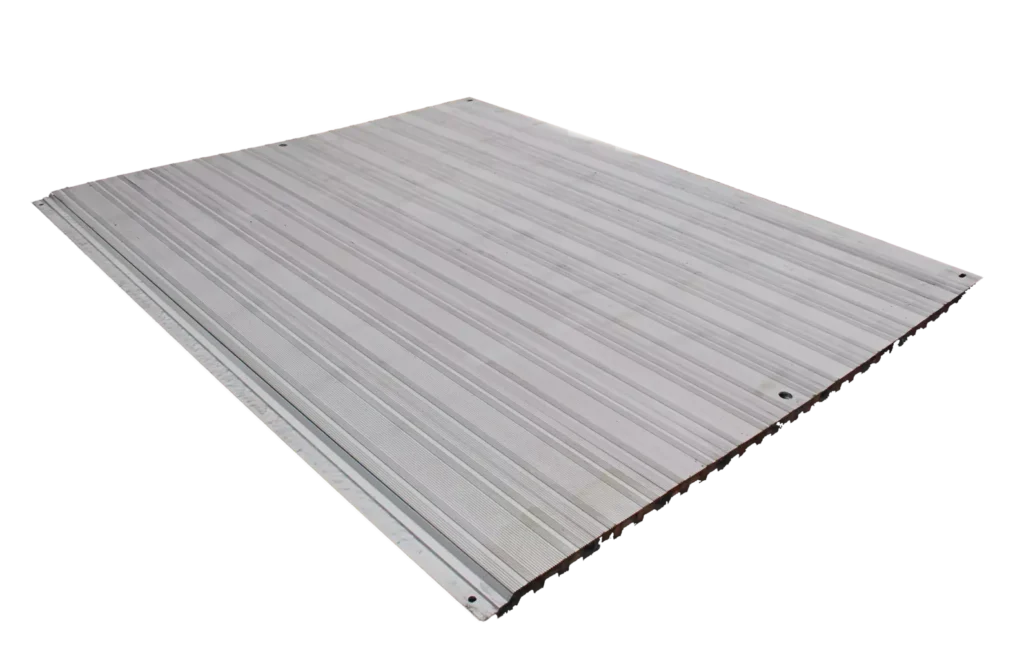
2. Aluminium Plates
Aluminium road plates are valued for their strength, lightness, and ease of transport and assembly – they can be laid and dismantled in a short time, making them an ideal solution for outdoor events, temporary access roads, or investments where mobility is key. In this category, two variants are available: Alu Deck (panel weight ~220 kg, dimension 213.5 × 300 cm), chosen for standard loads and frequent relocation. Alu Deck HD (dimension 213.5 × 300 cm) is a reinforced version with higher load capacity, recommended where the surface must withstand the heaviest machinery and material storage.
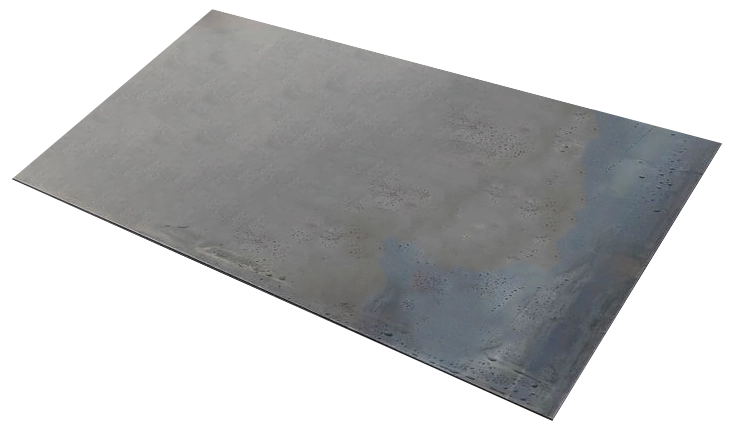
3. Steel Plates
Very durable, resistant to twisting and impacts, making them ideal in areas with high traffic of heavy machinery, including tracked vehicles. Typical thicknesses and dimensions are tailored to the conditions in which the plates are used daily – where strength is necessary with a relatively smaller panel thickness.

4. Metrum Wooden Panels
Metrum panels are a lightweight and practical solution primarily used where the ground is soft, marshy, or uneven. Their large format allows for even distribution of pressure, protecting the ground from ruts and equipment sinking. This makes them ideal for temporary access roads or work surfaces for short-term projects. Installation is quick and does not require complex equipment, which further reduces costs.
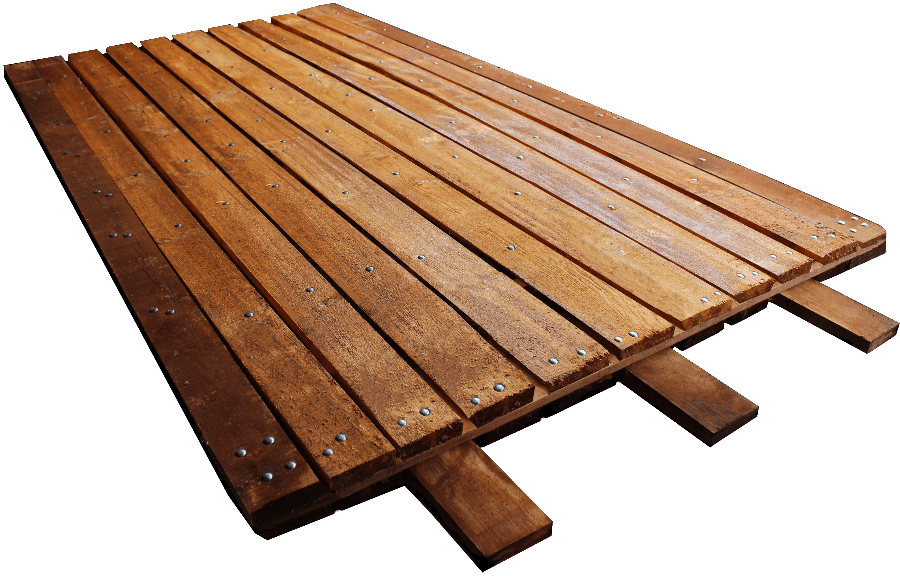
5. Strong Wooden Boards
The Strong version is a reinforced alternative to classic Metrum boards. They have a more robust construction and better withstand greater loads, which is why they are chosen for work with heavier construction or transport equipment. Compared to concrete or steel plates, they remain easier to handle and more mobile, making them a convenient choice for short-term investments. With greater durability than standard Metrum, they provide operational reliability in more demanding terrain conditions.
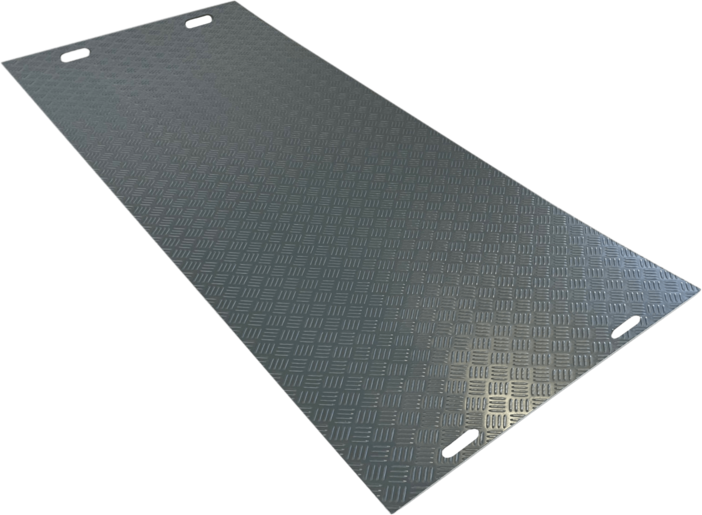
6. Flex Deck Plastic Plates
Flex Deck are lightweight panels made of LDPE, which can be laid by hand without the use of heavy equipment. Their surface is non-slip, improving safety for both pedestrians and vehicles. They are resistant to moisture and many chemicals, making them suitable for securing green areas, lawns, or delicate surfaces. This is an ideal solution for outdoor events and short-term investments where quick installation and ground protection are important.
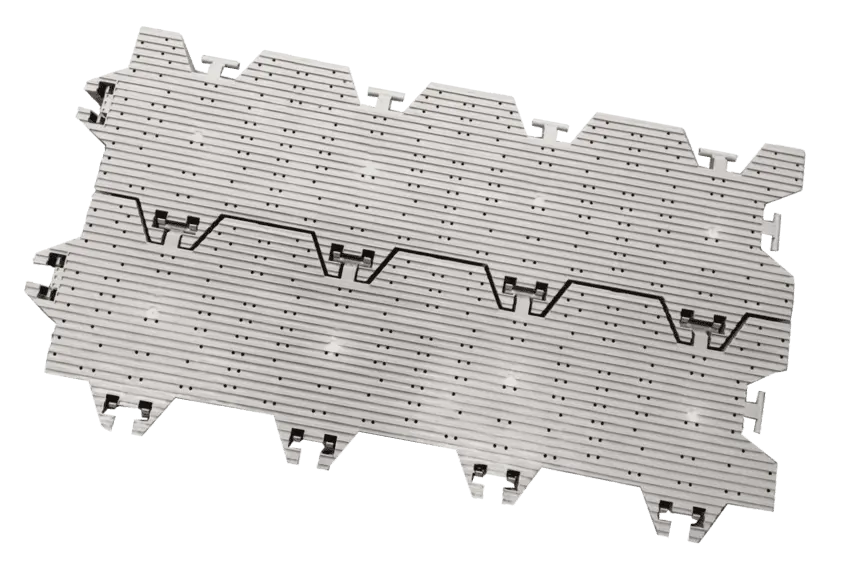
6. Heavy Deck Plastic Plates
Heavy Deck are reinforced polypropylene panels that withstand greater loads than standard Flex Deck. They can handle dynamic loads of up to approximately 1.5 t/axle and static loads up to 10 t/m², making them a practical solution for temporary pathways and walkways. They are often used to protect turf during mass events when greater durability is required. An additional advantage is the profiled surface and water drainage system, which enhance functionality and protect the area from damage.
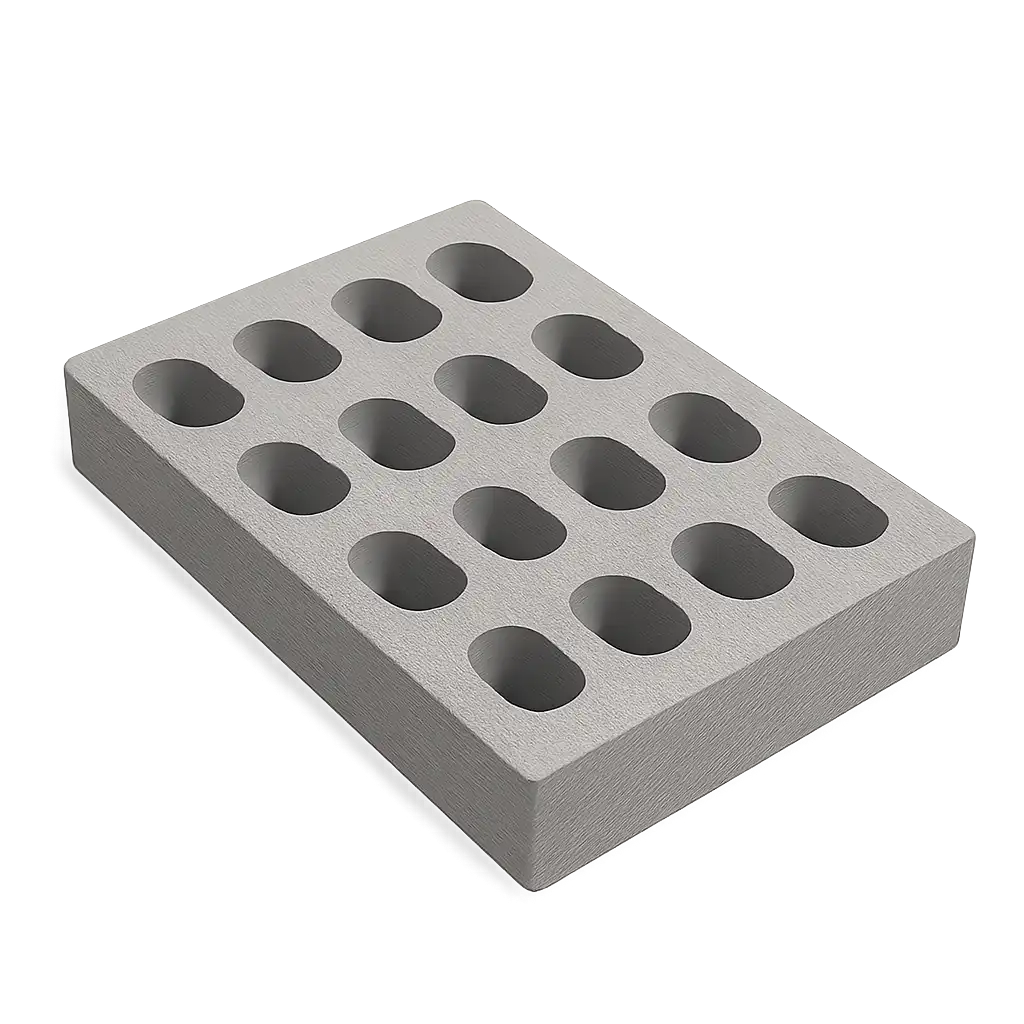
7. Jomb / Jumbo Slabs
Concrete slabs of the JOMB type have a distinctive shape and are used where a solid, concrete surface with large areas is needed — industry, logistics, storage yards. They are heavier, less mobile than aluminum or plastic, but offer very high stability and durability under heavy loads.
Applications of Road Plates
Types of Road Plates translate into a vast number of applications. This makes them visible in practically every industry.
Construction – hardening of construction sites, access roads, container backyards, storage areas for materials.
Logistics – road plates for hardening maneuvering yards, transshipment terminals, or temporary parking lots.
Industry and Energy – surfaces for heavy equipment, wind farms, field investments.
Rail – technological roads along tracks, access to sidings.
Defense – maneuvering yards, access to military units, transshipment zones.
Events and Mass Gatherings – protecting stadium turf, temporary access roads, surfaces for stages and backstage.
Temporary Roads – quickly restoring passability in difficult terrain, e.g., during construction or infrastructure renovation.

If you want to see how road plates perform in practice, check out the implementation section. There you will find examples of applications in various industries – from construction and industrial investments, through logistics and energy, to outdoor events. It is the best way to see how different types of plates function in real conditions and what results can be achieved by using them.
Cost Comparison – Renting or Buying?
One of the most common questions is: how much do road plates cost? The answer is not straightforward because the price depends on the type of material, thickness, size, and logistics.
Renting road plates – cost-effective for short projects, outdoor events, temporary investments. The initial cost is low, and the rental company handles the transport and collection after the work is completed.
Buying road plates – more advantageous for long-term projects. Once purchased, the plates can be reused multiple times, which reduces the unit costs over time.
In practice, many investors choose a mixed model – they buy some plates and rent others depending on the nature of the investment.
Do you need road plates for your project?
Whether you’re looking to rent road plates for a short period, purchase concrete slabs for years, or event systems to protect turf and ground – we will prepare the best solution for you. We offer comprehensive services: consulting, transport, assembly, and disassembly throughout Poland and Europe.
Contact us and order road plates tailored to your project.
Call us at 500 002 005 or email us at kontakt@drogitymczasowe.com. Alternatively, contact us via the form.
FAQ – Frequently Asked Questions about Road Plates
How much do road plates cost?
The price depends on the type and technical parameters. The cheapest options are wooden or plastic boards, which are used for lighter loads and shorter projects, hence we rent them. Aluminum and steel boards are more expensive, but their advantage is mobility and resistance to extreme conditions. Classic reinforced concrete slabs (including MON and JOMB slabs) offer the best price-to-durability ratio, which is why they are often chosen for construction sites and permanent surfaces. The final price also includes transportation and possible installation costs.
How to transport road plates?
Lightweight LDPE plastic panels (e.g., Flex Deck) or polypropylene (Heavy Deck) can be transported by smaller vehicles and laid manually. All other types – aluminum, steel, wooden, and reinforced concrete – require truck transport and unloading with an HDS crane or excavator. Proper securing of the boards during transport (straps, spacers, pads) is crucial to avoid damage.
How to install road plates?
Installation of simple plastic panels can be done manually, which is advantageous for short-term projects. Reinforced concrete, wooden, aluminum, and steel boards are laid using cranes or excavators, and precise positioning is ensured by transport handles built into the panels. Often, prior preparation and leveling of the ground is crucial – although not always necessary.
When to choose aluminum plates, and when steel ones?
Aluminum boards are worth choosing when mobility and quick assembly are important – for example, at events, short-term investments, or temporary access roads. They are lighter and easier to handle. Steel boards, on the other hand, are recommended for very heavy loads – they are suitable for equipment bases, heavy load transport, or with tracked machines, where maximum resistance to impacts and twisting is crucial.
Are road plates suitable for hardening a yard?
Yes, this is one of their primary uses. Thanks to the large surface area of the slabs, loads are distributed evenly, which helps prevent ruts and ground settlement. Depending on the type of site (warehouse, terminal, construction site), reinforced concrete, steel, or aluminum slabs can be used. Lighter plastic or wooden solutions are suitable where traffic is lighter, and the priority is ground protection and quick installation.